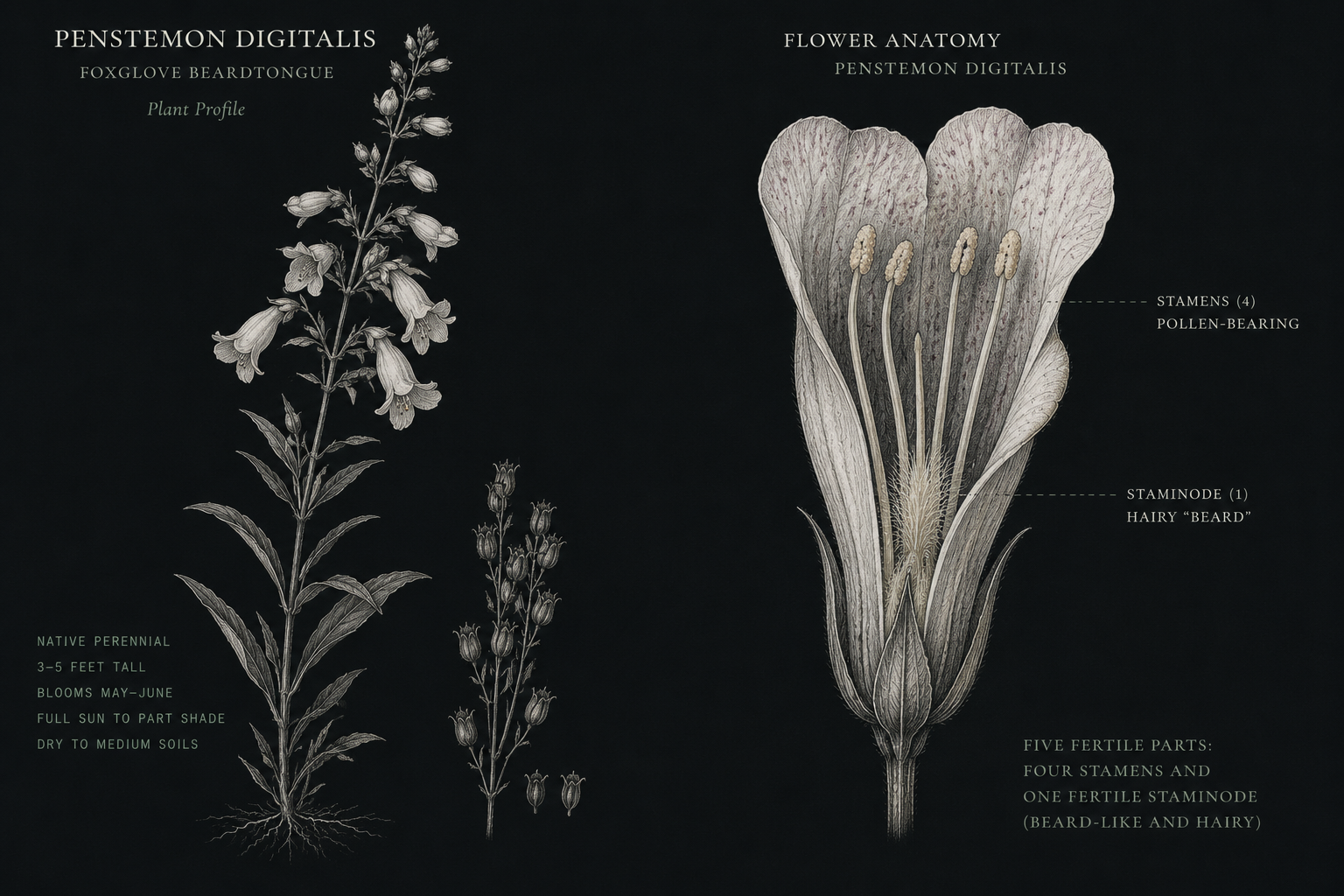
The Beardtongue — a Fifth Stamen That Never Produces Pollen
Most flowers have stamens — the male pollen-producing organs — in even numbers. Penstemon has five, which is where the genus name comes from: penta (five) + stemon (stamen). But that fifth stamen is sterile. It produces no pollen, extends through the flower tube like a tongue, and is typically covered along its tip in a tuft or "beard" of small hairs. This structure — the staminode — is the source of the common name beardtongue, and it is what makes a Penstemon recognisable once you've looked closely.
What does the hairy staminode actually do? The prevailing hypothesis is that it serves as a landing guide or contact surface for bees entering the tube — the texture of the hairs may dislodge pollen from a visiting bee's body and position it precisely. It may also block the throat slightly, preventing very small insects from accessing nectar without making contact with the anthers. The beardtongue is the flower's doorman.