Ohio Native Plant

Switchgrass

Panicum virgatum

A native warm-season grass with deep roots, winter structure, and major soil-building value.

Plant Type Warm-season grass
Height 3–6 feet
Light Full sun to part sun
Moisture Dry to medium; tolerates moist
Seasonal Interest Late summer through winter
Wildlife Value Seeds, cover, insect habitat

About This Plant

An Ohio Prairie Staple

Switchgrass is a native warm-season grass valued for its upright form, airy seed heads, deep roots, and strong seasonal interest. It brings movement and structure to native gardens while supporting birds, insects, and soil health.

Naturally occurring in prairies, open meadows, savannas, roadsides, and moist low areas across much of North America, it is especially useful in Ohio landscapes for sunny meadow-style plantings, rain gardens, and restoration-inspired beds.

Best garden uses

Meadow & prairie plantings Rain gardens Bioswales Erosion control Sunny borders Winter structure Habitat gardens

Botanical Plate

Switchgrass

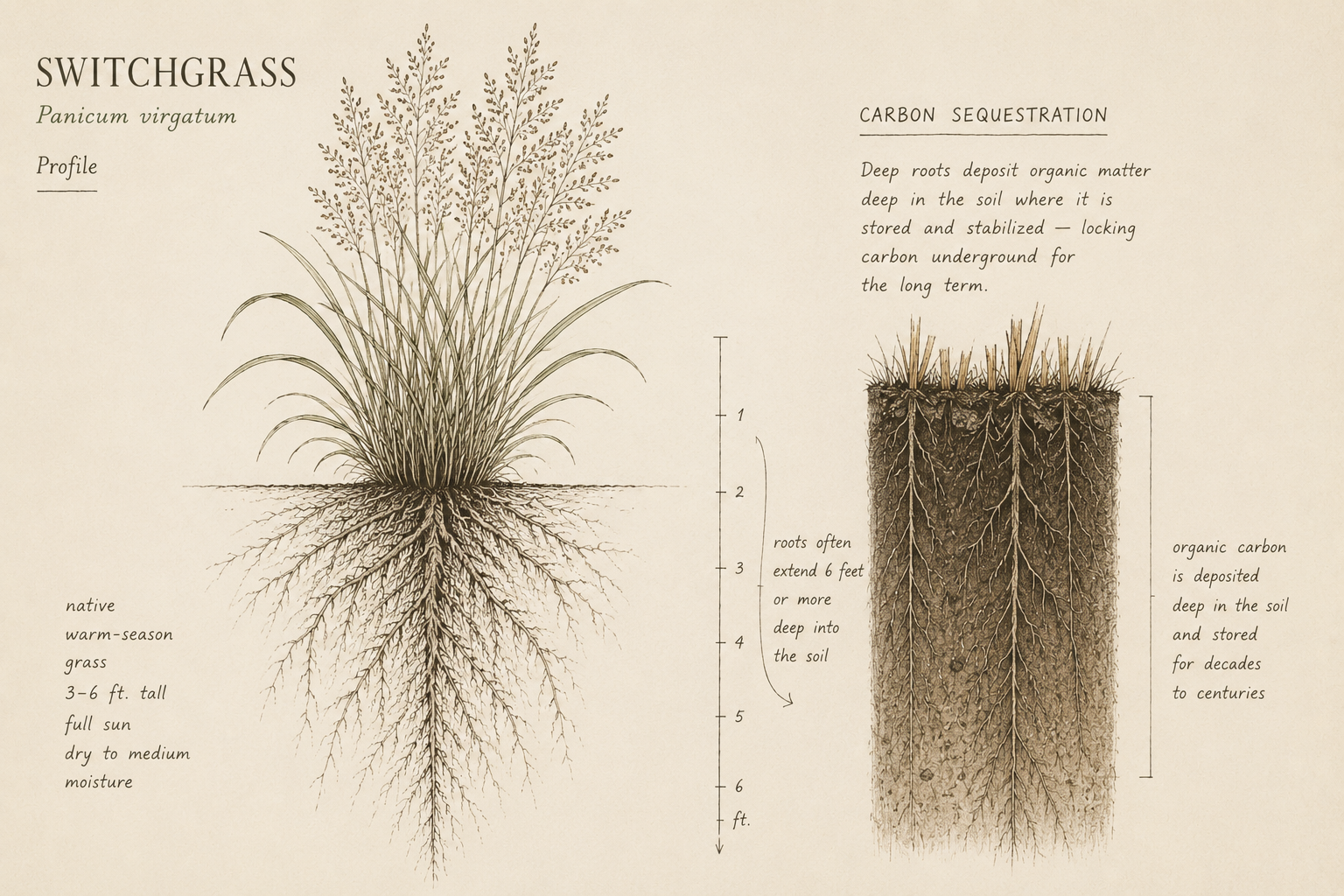
Botanical field-plate illustration of Switchgrass
Switchgrass · Botanical field plate

Ecology

Wildlife & Habitat Support

Switchgrass provides seeds for birds and dense cover for small wildlife. Its growth offers shelter, nesting material, and overwintering habitat for insects.

Grasses support the base layer of any habitat. Switchgrass helps create a more complete garden ecosystem — not just flowers for pollinators, but structure, cover, and food for the whole food web.

Below the Surface

Remarkable Root System

While switchgrass may stand 3–6 feet tall, its roots can extend just as far — or farther — downward. Some switchgrass roots have been documented reaching more than 2 meters into the soil.

Deep roots stabilize soil, reduce erosion, and push carbon underground where it builds long-term soil organic matter — feeding underground microbial communities in the process.

Care & Cultivation

Growing Conditions

☀️

Light

Full sun is best; tolerates part sun

🌱

Soil

Adaptable to clay, loam, and sandy soils

💧

Moisture

Medium to dry; tolerates some wet

✂️

Cut Back

Late winter or early spring, before new growth

📐

Spacing

2–3 feet, depending on variety

❄️

Winter

Leave standing — seeds and structure benefit wildlife

Planting Partners

Grows Well With

Switchgrass pairs naturally with other Ohio natives in meadow-style and prairie-inspired plantings:

New England Aster

Symphyotrichum novae-angliae

Goldenrods

Solidago spp.

Mountain Mint

Pycnanthemum spp.

Common Milkweed

Asclepias syriaca

Purple Coneflower

Echinacea purpurea

Wild Bergamot

Monarda fistulosa

Did You Know?

The Stories Behind This Grass

01

There's More Going On Underground Than Above It

Switchgrass may look like a modest garden grass, but below the surface it's an entirely different story. While the plant stands 3–6 feet tall, its roots can plunge 6 feet or more into the earth — and some documented prairie switchgrass roots have reached beyond 2 meters deep.

Those roots aren't just anchoring the plant. They're actively building soil — depositing organic matter as they grow and die back, feeding billions of underground microbes, and slowly improving the structure of even poor, compacted, or clay-heavy soil over time.

02

It Captures Carbon and Puts It Underground

Switchgrass is one of the most studied plants in the world for its potential role in carbon sequestration. Because its roots grow so deep and die back in cycles, they deposit significant amounts of organic carbon into layers of soil that are relatively stable — meaning that carbon stays underground rather than returning to the atmosphere.

Some researchers have explored switchgrass as a large-scale bioenergy crop specifically because of this property. In a garden context, even a small planting is doing a version of the same thing: quietly moving carbon from the air into the ground, season after season.

03

It Once Covered Millions of Acres of Ohio

Before European settlement, Ohio had vast stretches of tallgrass prairie and oak savanna — especially across its western and central regions. Switchgrass was one of the dominant grasses of those landscapes, growing in great stands alongside big bluestem, Indian grass, coneflowers, goldenrods, and asters.

Nearly all of it is gone now, converted to farmland and development over the past two centuries. Less than one tenth of one percent of Ohio's original prairie remains. The native plantings that exist today are small but genuine efforts to bring pieces of that landscape back, one plant at a time.

04

Winter Is When It Does Some of Its Best Work

Most gardeners think of switchgrass as a summer plant — and it is beautiful then, with its airy seed heads catching light and movement. But its ecological value doesn't stop when temperatures drop.

Left standing through winter, switchgrass stems and seed heads become a resource: seeds for sparrows and other birds, hollow stems for overwintering native bees, and dense clumps that shelter small mammals and insects through the cold. The old instinct to cut everything back in fall turns out to cost the garden quite a lot. Waiting until late winter — or early spring before new growth begins — is both easier and far better for wildlife.