The Caterpillar's Poison Is the Plant's Poison
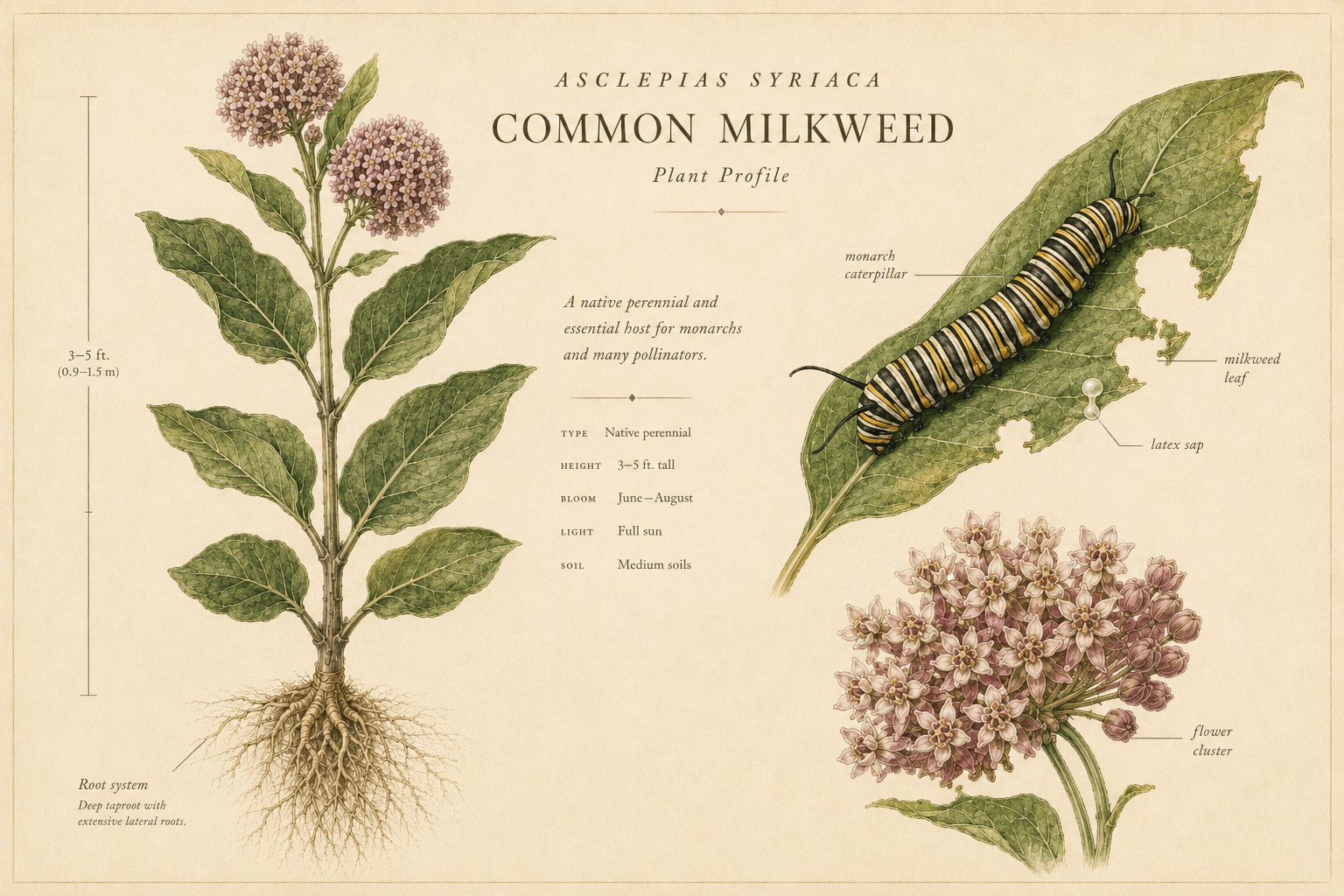
Monarch caterpillars feed exclusively on milkweed and in doing so ingest cardenolides — toxic steroid compounds the plant produces as a defence against herbivores. Rather than being harmed by these compounds, monarchs have evolved a biochemical tolerance that allows them to sequester the cardenolides in their own tissues.
The result is that both the caterpillar and the adult butterfly are toxic to most vertebrate predators. Birds that attempt to eat monarchs typically learn quickly, through unpleasant experience, to avoid the orange-and-black pattern. The monarch's warning colouration is not incidental — it is a direct advertisement of the milkweed chemistry carried in its body. The plant's defence has become the butterfly's defence, repurposed across millions of years of co-evolution.