Ohio Native Plant

RattlesnakeMaster

Eryngium yuccifolium

A sculptural prairie plant with striking globular seed heads, deep roots, and exceptional value for native insects.

Type Native perennial wildflower
Height 3–5 feet
Bloom Mid to late summer
Light Full sun
Moisture Dry to medium
Soil Clay, loam, lean, rocky

About This Plant

A Prairie Architect

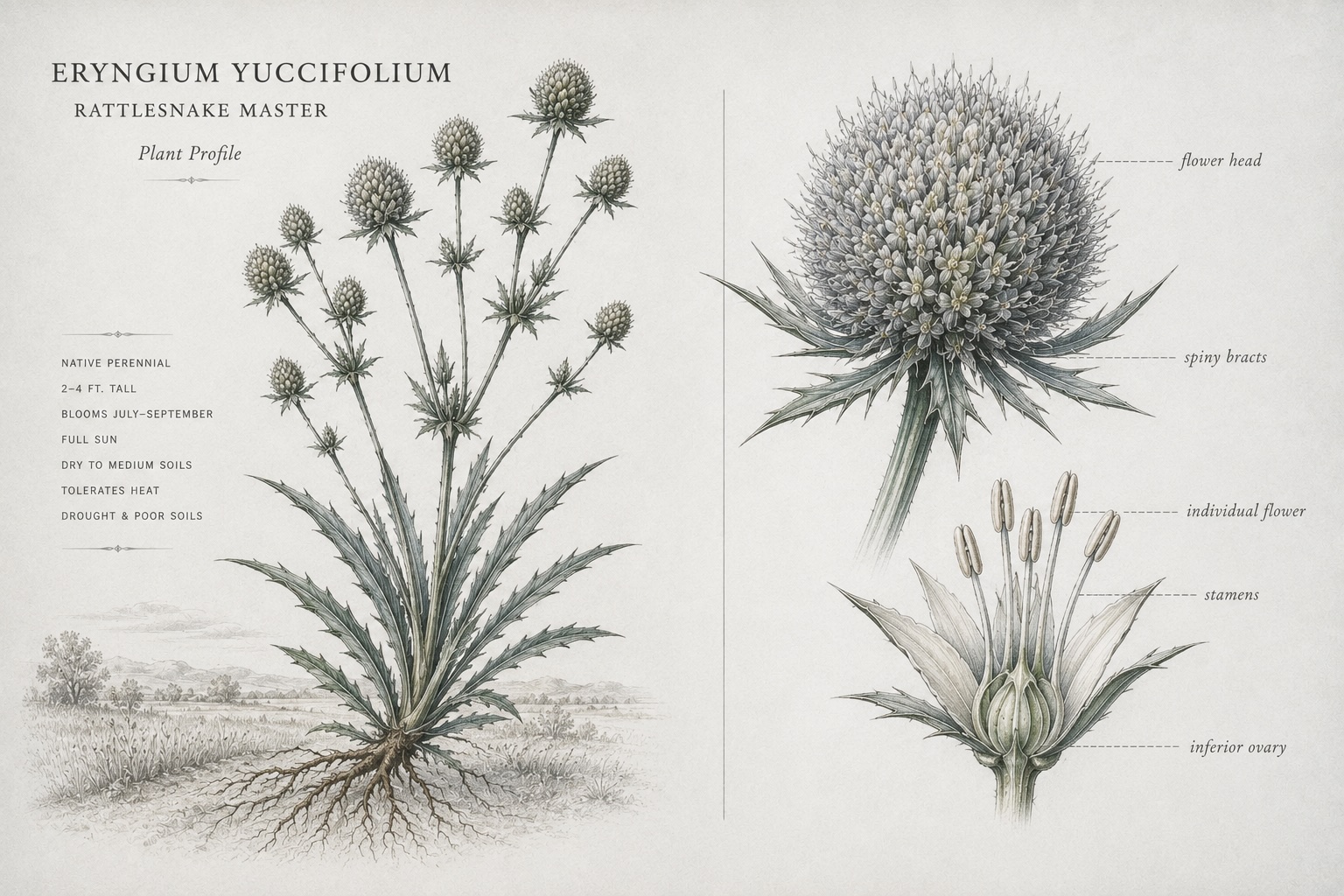
Rattlesnake master is one of the most visually striking native prairie plants. Its sword-like, yucca-resembling leaves rise in a basal rosette, and stiff branching stems carry round, spiky globes in summer — pale greenish-white, almost otherworldly.

Despite its bold architectural presence, the flowers are remarkably valuable to pollinators and beneficial insects. In a naturalistic planting, it adds structure and contrast that few other plants can match.

Best garden uses

Prairie gardens Pollinator gardens Dry sunny borders Lean-soil plantings Winter structure Habitat gardens Meadow plantings

Botanical Plate

Rattlesnake Master

Botanical illustration of Rattlesnake Master
Eryngium yuccifolium · Botanical Plate

Ecology

A Pollinator Hub

Rattlesnake master is a magnet for insect activity. Its clustered globes attract an unusually wide range of visitors — not just familiar butterflies, but the specialist insects that most gardens never see.

These smaller, less-noticed insects — wasps, flies, beetles — are part of the larger food web, supporting birds, predatory insects, and overall garden biodiversity. Rattlesnake master serves all of them.

Its stiff stems and seed heads remain standing into fall and winter, adding structure and shelter for small overwintering insects.

Care & Cultivation

Growing Conditions

Rattlesnake master thrives where other plants struggle — lean, dry, sunny spots are ideal. It resents consistently wet or overly rich soil, which can cause flopping and weak growth.

Light Full sun; does not perform well in shade
Soil Well-drained; clay, loam, rocky, or lean soils all work
Moisture Dry to medium — avoid consistently wet conditions
Spacing 18–30 inches apart; forms tidy clumps
First season Water regularly until established, then reduce
Winter care Leave stems and seed heads standing for structure and habitat
Cut back Late winter or early spring before new growth

Planting Partners

Grows Well With

Rattlesnake master's bold, spiky globes contrast beautifully with soft grasses, daisy-shaped flowers, and airy plumes. These Ohio natives make natural companions:

SwitchgrassPanicum virgatum
New England AsterSymphyotrichum novae-angliae
GoldenrodsSolidago spp.
Mountain MintPycnanthemum spp.
Common MilkweedAsclepias syriaca
Purple ConeflowerEchinacea purpurea

Did You Know?

The Stories Behind This Plant

01

It Doesn't Actually Master Rattlesnakes

The name sounds like folklore — and it is. Rattlesnake master doesn't repel, attract, or subdue rattlesnakes in any way. The name comes from its historical use as a supposed snakebite remedy by Indigenous peoples and early American settlers, who prepared roots, leaves, and extracts from the plant as treatments.

Whether it ever worked is another question entirely. But the name stuck — and few plants have a more dramatic label for something that amounts to a misattributed old remedy.

02

It Looks Like a Thistle — But It Isn't

Most people who see rattlesnake master for the first time assume it's a thistle or even a yucca. The spiky round heads look thistle-like; the leaves look yucca-like. In fact, it belongs to the carrot family — Apiaceae — making it a close botanical relative of Queen Anne's lace, wild parsnip, and dill.

This is one of nature's stranger design coincidences: a member of the carrot family that looks nothing like a carrot and everything like a desert succulent.

03

Each Globe Is a Tiny Insect City

What looks like a single spiky ball is actually a dense cluster of dozens of small individual flowers packed together — each one accessible, each one producing nectar and pollen. This architecture makes the flower head function like an open market: easy landing, easy access, constantly busy.

Studies of prairie plants have documented an extraordinary range of insect visitors on rattlesnake master — not just the familiar butterflies and bumblebees, but specialist native bees, parasitic wasps, soldier beetles, hoverflies, and small specialist flies that most gardeners never notice. These are the "background" insects of a healthy ecosystem: pollinating, predating pests, and feeding the birds and other creatures that depend on insect abundance.

One rattlesnake master plant in bloom is, in insect terms, a genuinely lively place.

04

Ohio Once Had Prairie — and This Plant Was Part of It

Before European settlement, Ohio had extensive areas of prairie and oak savanna in its western and central regions — the easternmost edge of the great Midwest grassland system. Rattlesnake master was a native component of those landscapes, growing alongside switchgrass, goldenrods, coneflowers, and asters in the sunny, well-drained openings that fire and grazing maintained.

Almost all of that prairie is gone now, converted to farmland and development. The native gardens that exist today — like this one — are small but real contributions to restoring those communities, plant by plant.